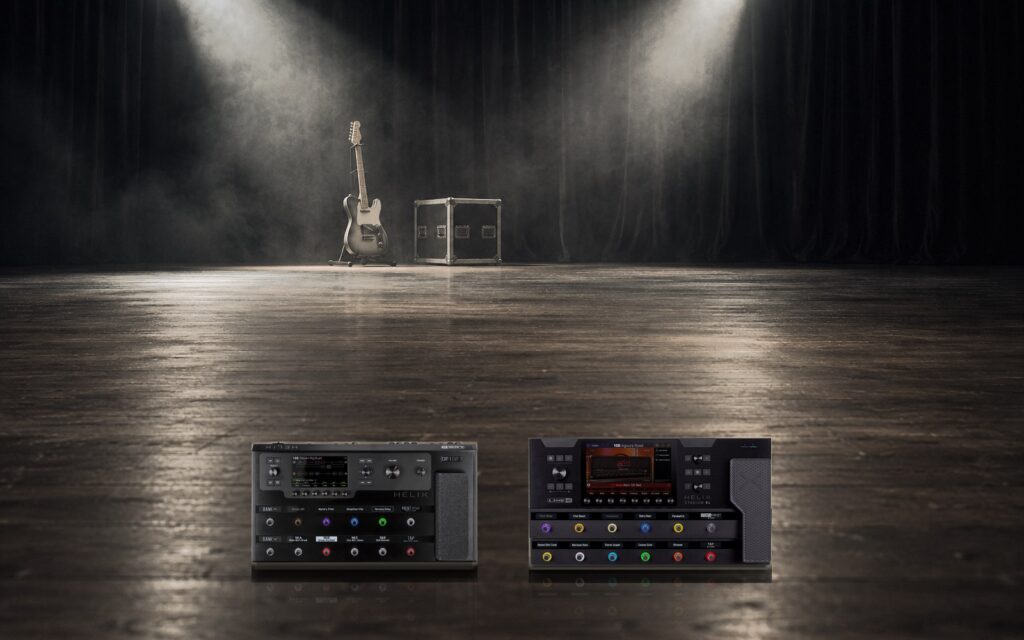
A practical discussion about simplifying your digital guitar rig.
If you're anything like me, one of the things you probably enjoy about owning a digital guitar modeler is the almost endless number of tones you can create.
Whether you're using a Line 6 Helix, Stadium, Fractal, Quad Cortex, or another modeler, it's pretty amazing how much gear we have available at our fingertips.
Dozens of amplifiers, hundreds of effects, different speaker cabinets, microphones, and countless ways to combine them.
And that's before we start downloading presets created by other guitarists!
But here's a question I've been asking myself lately:
How many guitar presets do we really need?
The Never-Ending Search for the Perfect Preset
I think most of us have been there.
We find a preset that sounds fantastic, play it for a while, and then discover another one that promises even better tone.
Before long, we've collected dozens of presets, each with slightly different amplifiers, overdrives, EQ settings, and effects.
And somehow, despite having all these great options, we keep coming back to the same handful of sounds.
There's nothing wrong with experimenting. In fact, that's one of the things I enjoy most about digital modeling.
But at some point, I think collecting presets can become a distraction from actually playing guitar.
Maybe Three or Four Great Sounds Are Enough
When I think about the tones I actually use, especially for contemporary worship music, most of them fall into a few familiar categories.
Clean and Ambient: A clear, articulate sound with delay and reverb for softer passages and melodic picking.
Edge of Breakup: A slightly driven tone that responds naturally to picking dynamics and works beautifully for rhythm parts.
Crunch and Overdrive: A fuller, more aggressive sound for bigger choruses and driving rhythm sections.
Lead Tone: A smooth, sustaining sound that helps single-note melodies stand out without becoming overly loud.
The interesting thing is that these don't necessarily require four completely different presets.
With modern modelers, a single well-designed preset can often deliver all four sounds using snapshots, scenes, or footswitch assignments.
And that can make life much easier when you're playing live.
Consistency Is More Important Than Variety
One thing I've learned is that switching between completely different presets can sometimes create more problems than it solves.
Different volume levels, changes in EQ, unexpected jumps in gain, and effects that don't blend naturally can all become frustrating during a performance.
By working with a smaller collection of carefully refined presets, it's easier to maintain consistent volume, tone, and overall feel.
You also become more familiar with how your guitar responds to each sound.
And that's something I think we sometimes underestimate.
Don't Forget the Guitar Itself
Here's another reason you may not need as many presets as you think.
Your guitar already provides quite a bit of tonal flexibility.
Switching between neck, middle, and bridge pickups, adjusting the volume control, or rolling back the tone knob can change the character of a preset considerably.
A Les Paul with humbuckers will respond differently than a Telecaster with single coils, but that doesn't necessarily mean you need an entirely different collection of presets for every guitar.
Sometimes a small adjustment to input level, EQ, or gain is all that's needed.
The Real Advantage of Simplifying Your Rig
For me, the biggest benefit of having fewer presets is confidence.
When you're playing live, the last thing you want to be thinking about is whether you've selected the right preset or which footswitch controls a particular effect.
You want to know where your sounds are, trust that they'll work, and concentrate on the music.
And when something doesn't sound quite right, it's much easier to troubleshoot a familiar preset than one you've barely used.
So, What's the Right Number?
There's no magic number.
Some guitarists can cover an entire setlist with one carefully designed preset. Others prefer several presets tailored to different songs or guitars.
Both approaches can work beautifully.
But I've come to believe that a few excellent presets you know inside and out are far more valuable than dozens of presets you rarely use.
Modern guitar modelers give us an incredible amount of freedom and flexibility.
The trick is knowing when to stop tweaking and start playing.
After all, the goal isn't to own the largest preset collection.
It's to have great guitar tone that inspires you, when you actually need it. Most times, more is less.